Not ninety of them — this one. Every unit is serialised the moment it arrives, including the ones the manufacturer never numbered, onto a UHF RFID label. Everything it does afterwards is recorded against that name: the shelf it sat on, the person who moved it, the customer who bought it.
“Can you confirm whether a box has been moved from its designated shelf location — or is it still where it's supposed to be? And if it moved, where from?”
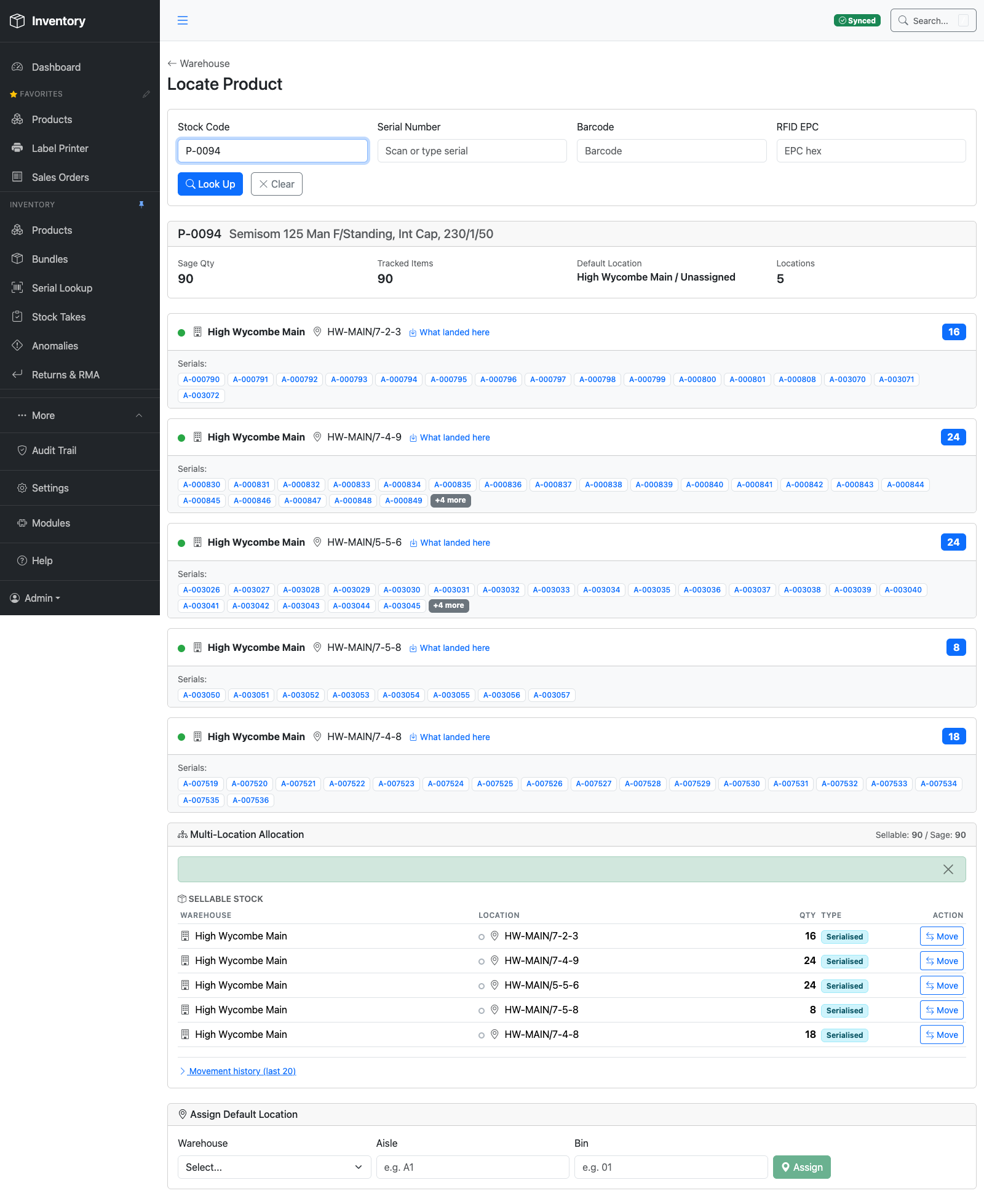
One product can sit in five different bins across a warehouse at once. QP Inventory shows all of them in a single lookup — by product code, serial, barcode or RFID tag — with the exact serials held at each location.
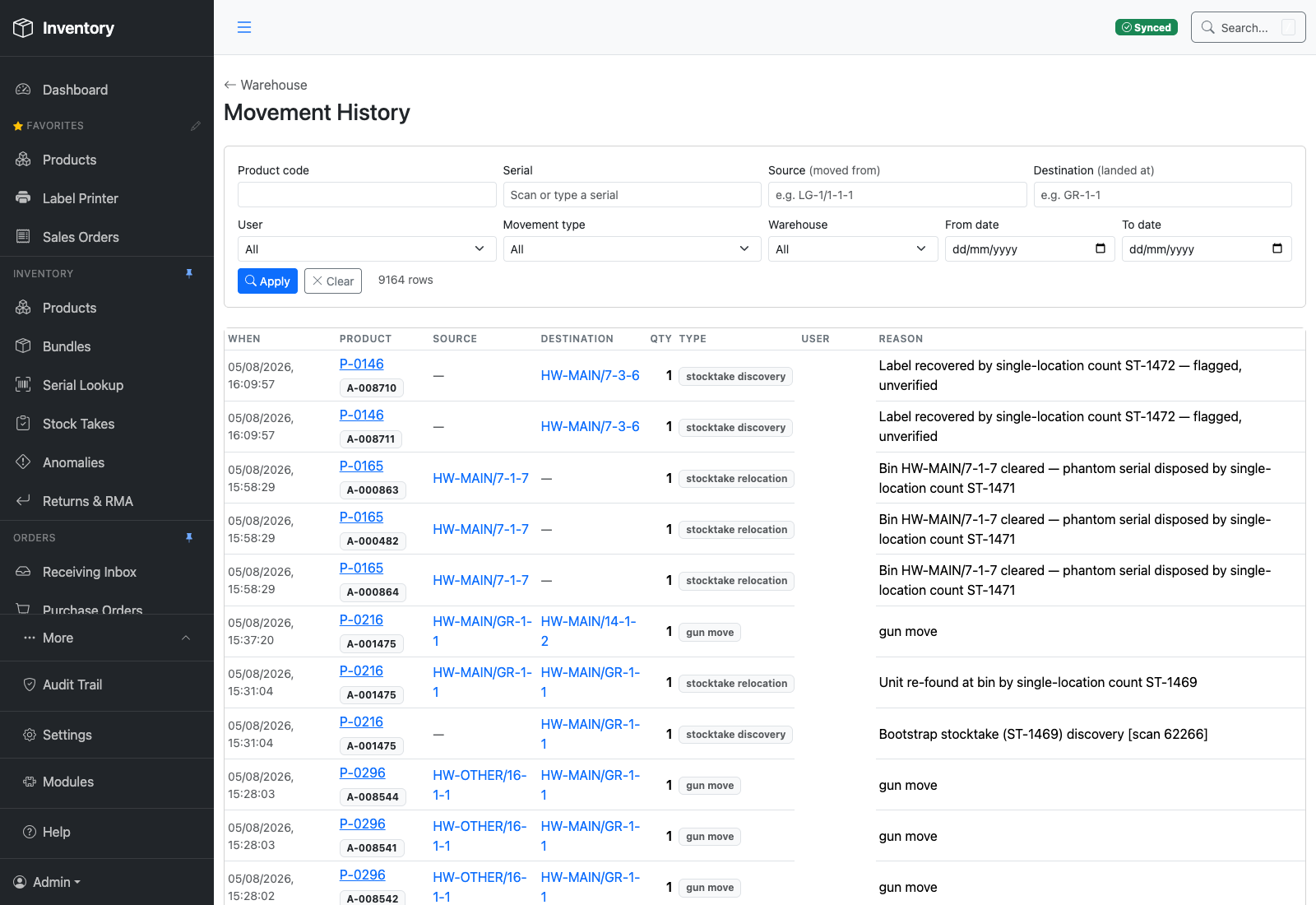
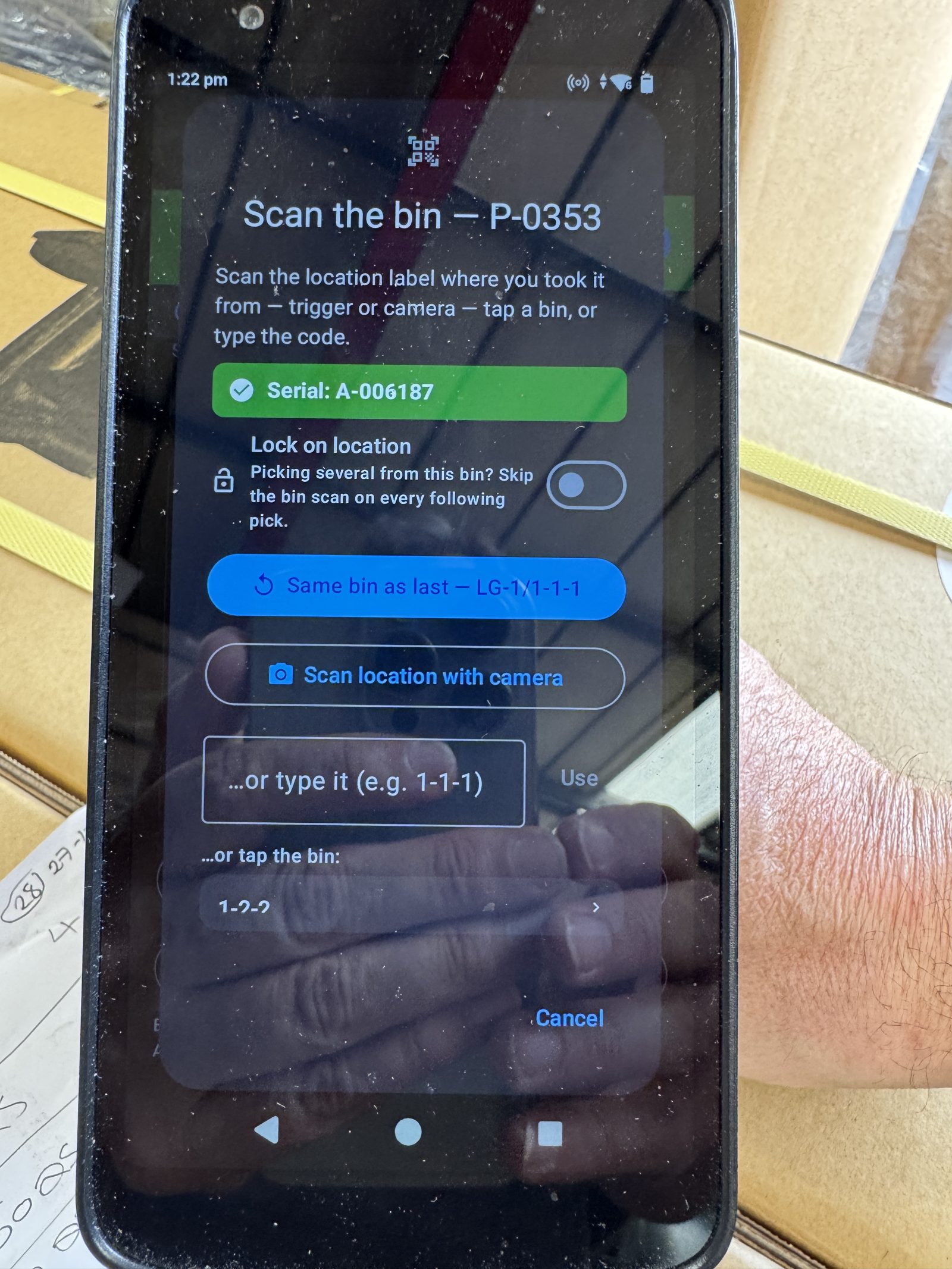
Every scan writes an audit row: what moved, which bin it came from, which bin it landed in, when, and who did it — including the moves nobody meant to make.
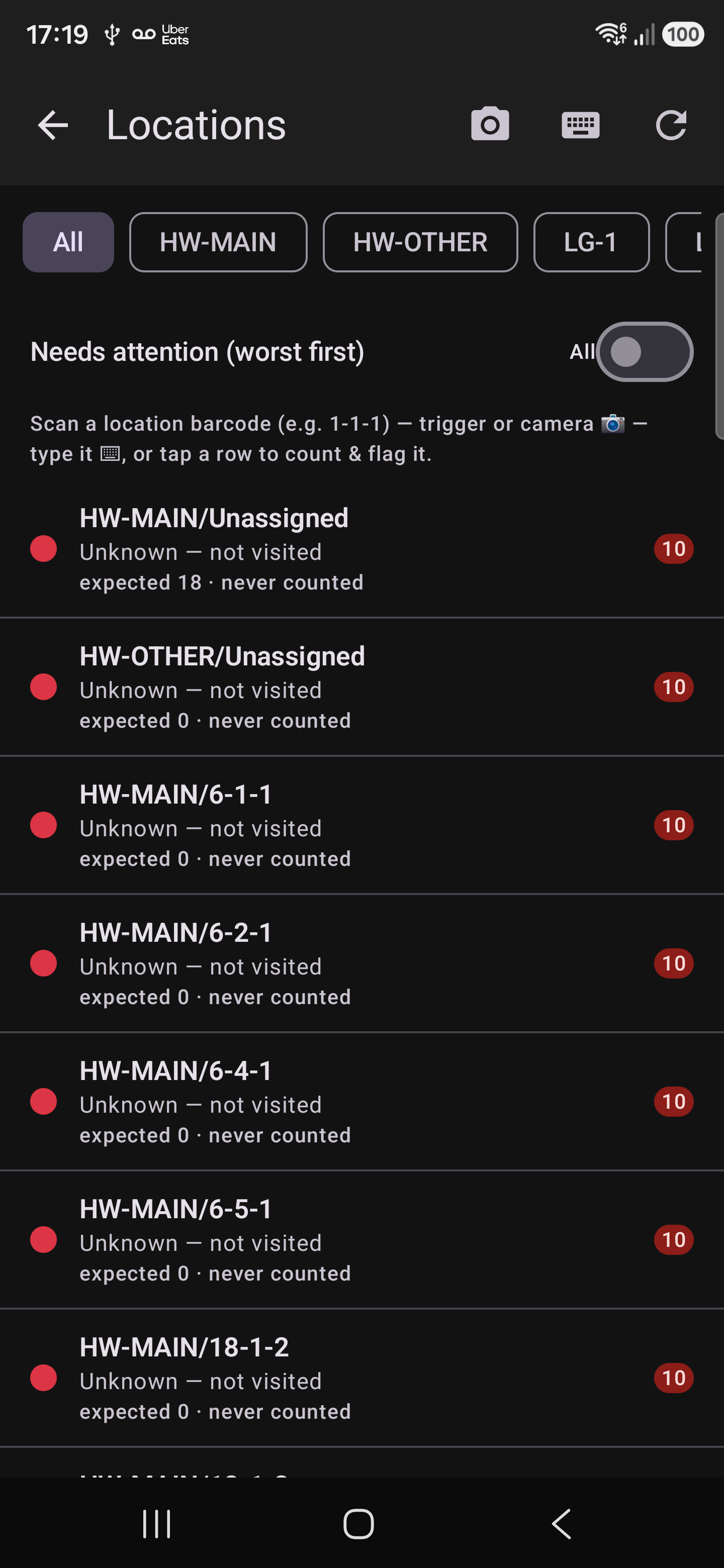
Every bin carries a status: confirmed by a physical scan, known empty, or not yet visited. “We haven't checked” is never quietly treated the same as “it's fine.”
Every unit carries its own serial and a UHF RFID tag, so you can follow one box from the day it lands to the customer who bought it — and count a whole bay by walking past it.
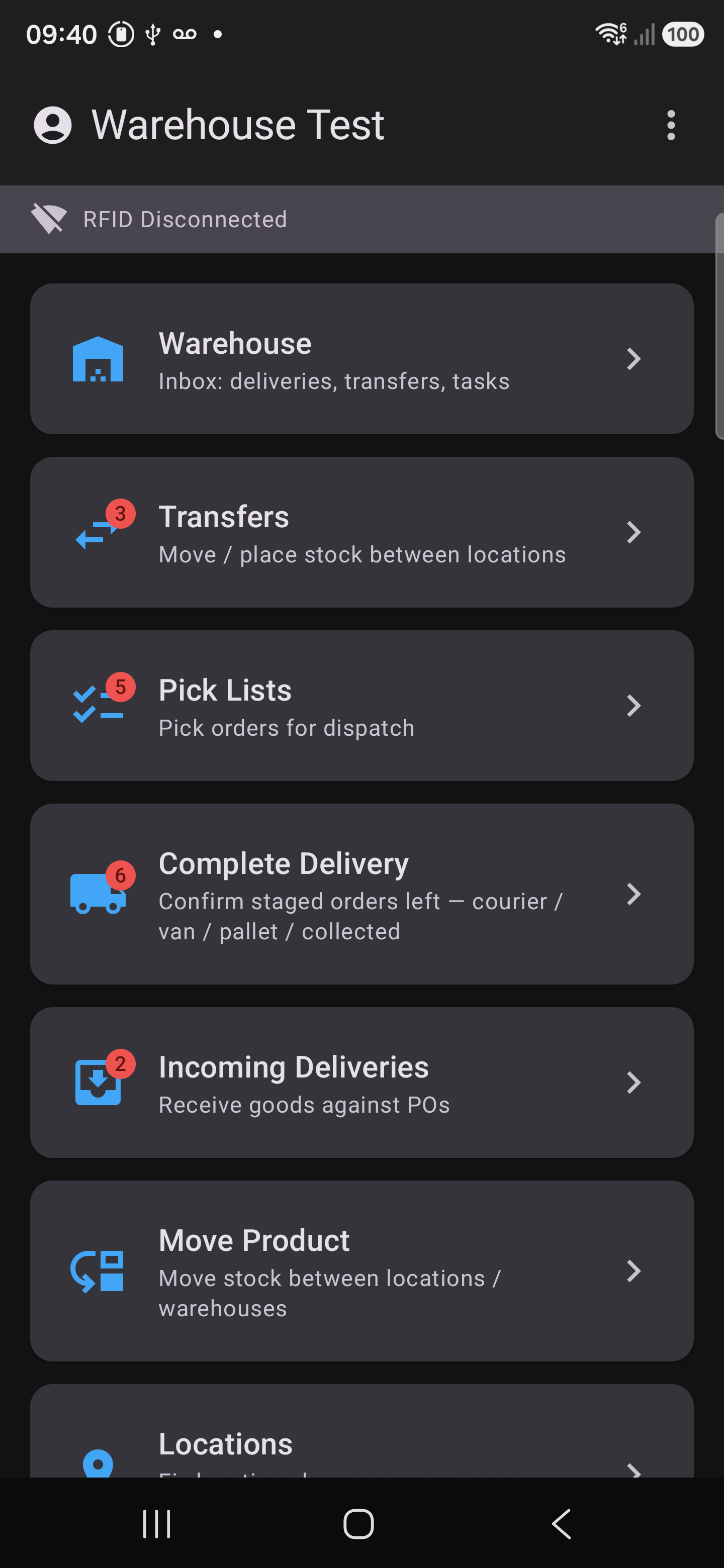
Follow a box 02Zebra RFID label printing and handhelds, plus the Android app that runs the whole warehouse job — and a camera that reads a maker's serial straight off the carton and photographs the order as it's packed.
See the handheld 03Dashboard, reporting, orders, bundles and builds — plus an AI you can talk to, out loud, that answers questions about your own data and writes the report to fit the question.
Look around 04The shipped feature list in full — and how it adapts. Sage 50 is what's built and proven; a different back office is a connector, not a rewrite.
Read the spec
Every screenshot on this page comes from the same live system a real pump distributor runs their warehouse on today — not mockups, not a sandbox seeded for a sales call.
Happy to walk through a live warehouse, or run a screen-share against your own product data.